For years, we’ve measured the success of security awareness by a single, flawed metric: the phishing click-rate. We send fake emails, track who clicks, and pat ourselves on the back when the number goes down. But what are we really measuring? Are we building a resilient workforce or just training employees to be paranoid about their inbox? A 2025 study by the SANS Institute found that organizations with a positive security culture, measured by proactive reporting and collaboration, experienced 67% fewer costly security incidents. That’s a number that matters. It shows that true security isn’t about avoiding mistakes. It’s about building a culture where people feel empowered to be part of the solution. It’s time to move beyond clicks and start a real conversation about changing behavior.
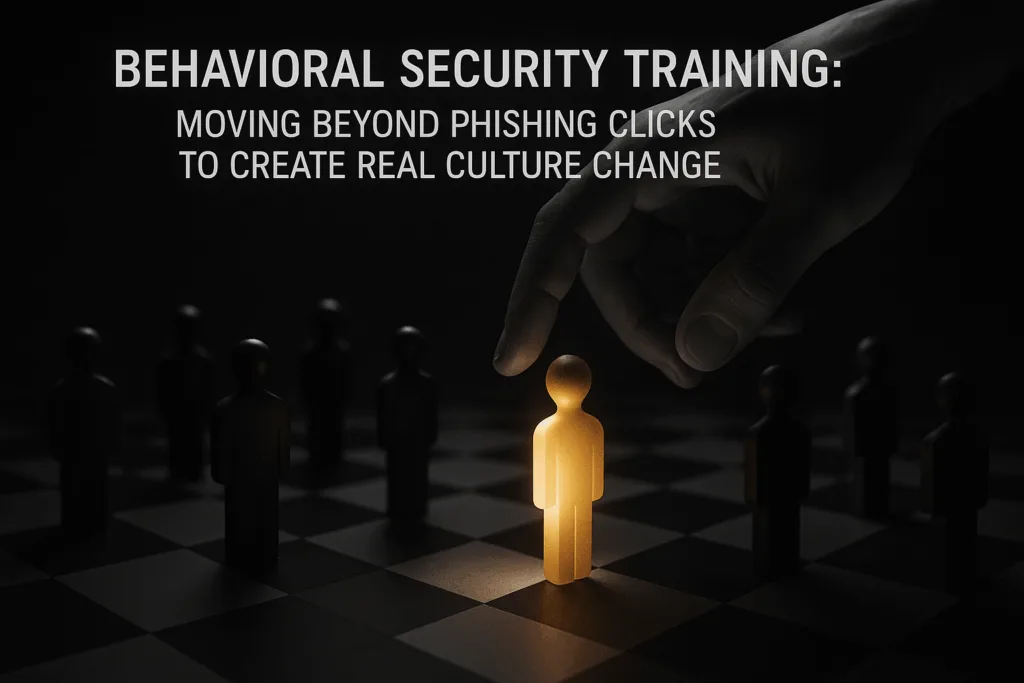
Traditional security awareness is stuck in a compliance-first mindset. It’s a checkbox item designed to satisfy auditors, not to inspire people. The result is generic, unengaging content that employees see as a distraction, not a resource. This approach often creates a culture of fear. When the primary interaction with the security team is a punitive ‘gotcha’ email after a failed phishing test, employees learn to hide their mistakes rather than report them. This fear-based model doesn’t just fail to change long-term behavior. It actively works against our goals by silencing the very people who are our first line of defense. The future of human risk management lies in a more empathetic, psychologically-informed approach. It requires a thoughtful application of Behavioral Security Training.
The Psychology of Secure Habits: Beyond Compliance
How do we get people to not just know what to do, but to want to do it consistently? The answer lies in organizational psychology, specifically in the science of motivation and habit formation. We need to stop treating employees like liabilities and start understanding them as human beings driven by complex cognitive processes.
Most security training relies on extrinsic motivation, using the threat of punishment to force compliance. This is the least effective way to create lasting change. Instead, we should focus on intrinsic motivation by tapping into an employee’s desire for autonomy, mastery, and purpose. Frame security not as a rigid set of rules, but as a shared goal that protects the company, their colleagues, and their own work. Give them the knowledge and tools to become competent defenders (mastery) and the freedom to make smart security decisions in their daily workflow (autonomy).
This is where positive reinforcement becomes critical. Research shows that positive reinforcement and gamification are twice as effective at producing lasting behavioral change than punitive methods. Instead of only flagging failed phishing tests, celebrate when an employee proactively reports a suspicious email. Create a ‘Security Champions’ program that recognizes and rewards individuals who go above and beyond. By focusing on what people are doing right, you build a positive feedback loop that makes secure behavior a satisfying and automatic habit, not a chore.
Measuring What Matters: New Metrics for a New Culture
If the phishing click-rate is the wrong metric, what should we be measuring instead? Effective Behavioral Security Training programs shift the focus from failure rates to engagement and partnership indicators. These new metrics give a much clearer picture of your actual security culture.
First, track proactive reporting. How many suspicious emails, texts, or calls are employees reporting without being prompted by a simulation? A high reporting rate, even if many are false alarms, is a sign of a healthy, vigilant culture. It shows that employees trust the security team and feel safe raising their hand when something feels off. This is infinitely more valuable than a low click-rate, which might simply indicate that your phishing simulations are too easy or that employees are too scared to engage with any email.
Second, measure collaboration and help-desk engagement. Are employees asking the security team for advice before clicking a link or downloading a file? Are they using the provided tools and resources? These interactions are powerful indicators of trust and partnership. You can also use qualitative data from surveys and focus groups to gauge employee sentiment. Do they see the security team as an enabler of their work or a roadblock?
Finally, replace punitive simulations with ‘teachable moments’. Instead of a simple ‘You failed’ message, a click on a simulation link should lead to a micro-learning module that instantly explains the specific red flags that were missed. This turns a mistake into an immediate, contextual learning opportunity, reinforcing the desired behavior without the associated shame or fear.
From Human Error to Human Firewall: Building Security Citizenship
A truly resilient organization is one that fosters ‘security citizenship’. This is the state where employees don’t just comply with security rules, they actively participate in the company’s defense. They feel a sense of ownership and responsibility because they are treated as valued partners, not as potential points of failure.
Building this culture starts at the top. Leadership must champion a blameless reporting environment. When an incident occurs, the focus should be on ‘what’ went wrong with the process or training, not ‘who’ made the mistake. This psychological safety is the foundation of trust. It encourages employees to report incidents quickly, which is crucial for effective containment and response.
Your program’s content must also be human-centric. Move away from generic, one-size-fits-all training. Tailor scenarios to different departments. An accountant faces different threats than a marketing manager or a software developer. When employees see training that reflects their actual daily work and the real-world threats they face, they are far more likely to engage and retain the information. This relevance is key to making security feel like an integrated part of their job, not a separate, mandated task.
Ultimately, a successful Behavioral Security Training program is about communication and empathy. It’s about building relationships between the security team and the rest of the organization. It’s about transforming your workforce from the biggest risk factor into your most powerful security asset.
The shift from compliance-based awareness to behavior-based culture change is not just a trend. It’s a fundamental evolution in how we manage human risk. By applying principles of psychology, measuring what truly matters, and treating our employees as capable partners, we can build organizations that are not only more secure but also more collaborative and resilient. The future isn’t about creating perfect humans who never make mistakes. It’s about building intelligent, adaptable systems where humans are equipped and empowered to be the strongest part of our defense.
Transform your security awareness from a compliance task to a culture-building asset with our behavioral science-based programs.