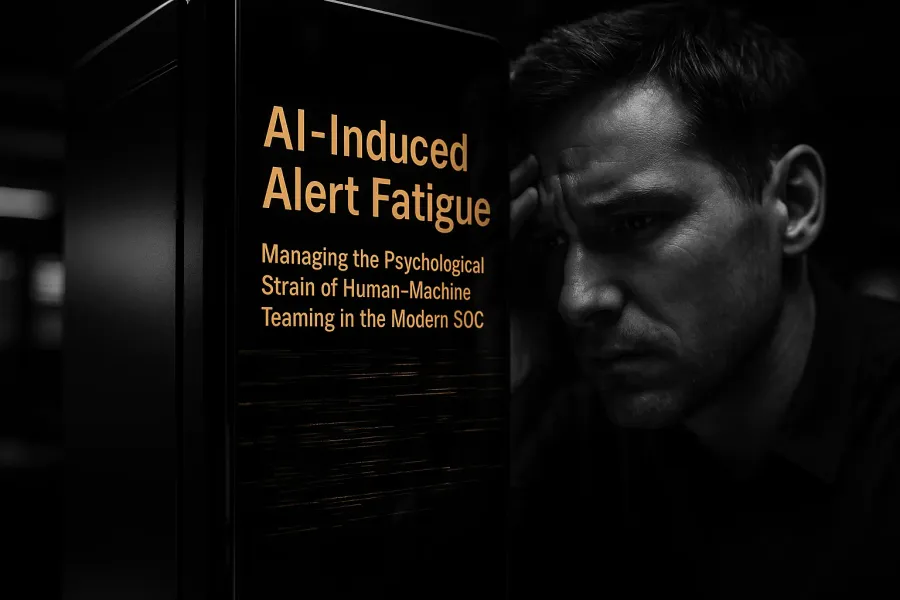
Are your security analysts drowning? We invested in artificial intelligence with the promise of a smarter, faster, more predictive Security Operations Center (SOC). We were promised an intelligent partner that could sift through the noise and pinpoint the real threats. Instead, for many teams, AI has become an overwhelming firehose, generating a relentless stream of low-context alerts. A recent survey showed that over 60% of SOC analysts feel overwhelmed by the volume of alerts they receive daily. This isn’t just a nuisance; it’s a crisis in the making. We are creating a new, insidious form of burnout: AI-induced alert fatigue, and it’s time we addressed the human cost.
The promise of AI in cybersecurity is real, but our implementation has often been flawed. We’ve treated these powerful platforms as simple alert cannons rather than as junior teammates that need to be trained, guided, and sometimes, questioned. The result is a growing distrust between human analysts and their machine counterparts. When the AI constantly ‘cries wolf,’ analysts begin to tune it out, creating dangerous blind spots where a critical threat could be dismissed as just more noise. The cognitive load of constantly validating, correcting, and second-guessing a machine is exhausting. It’s leading to higher turnover and hollowing out our most critical defense teams. We must shift our focus from managing tools to leading people through a complex technological change.
From Firehose to Teammate: Redesigning the Human-AI Workflow
The first step in combating AI-induced alert fatigue is to fundamentally redesign your SOC’s workflow. Stop thinking of the AI as a source of alerts and start treating it like a Level 1 analyst. It’s incredibly fast and can process immense data, but it lacks human intuition and context. Your workflow should reflect this reality.
This means creating a tiered system. The AI’s primary job should be to perform initial triage, automatically resolving the high-volume, low-risk noise. Its secondary job is to enrich and correlate data for the alerts it cannot resolve on its own. Only high-confidence, context-rich alerts should be escalated to human analysts. This escalation is not just a data dump; it should be a clear, concise briefing. The AI should present its findings, the evidence it used, and its confidence level. Think of it as a junior team member presenting a case to a senior investigator.
Furthermore, this relationship must be a two-way street. When an analyst overrides an AI’s conclusion, that feedback must be logged and used to retrain the model. This feedback loop is critical. It not only improves the AI’s accuracy over time but also gives analysts a sense of agency. They are no longer passive recipients of alerts but active participants in shaping the intelligence of their digital teammate.
Training for Trust: Empowering Analysts to Question the Machine
Effective human-machine teaming requires a new skill set for analysts. Training can no longer be about which buttons to click in a new platform. We need to train our teams to think critically about the outputs of AI systems. This is where the concept of ‘explainable AI’ (XAI) becomes essential. Many security tools still operate as ‘black boxes,’ providing a conclusion without showing their work. This is a recipe for distrust and fatigue.
As leaders, we must demand and invest in tools that provide transparency. An analyst needs to understand why the AI flagged a specific activity as malicious. Was it based on a known signature, an anomaly in user behavior, or a combination of weak indicators? Without this insight, analysts can’t validate the finding or trust the system. It’s like a doctor receiving a lab result with just the word ‘problematic’ on it. It’s useless without the underlying data and context.
Your training programs should focus on data interpretation, threat hunting methodologies, and the fundamentals of how the AI models work. Empower your analysts to be skeptical. Encourage them to ask questions, challenge the AI’s conclusions, and use their intuition to find what the machine might have missed. An analyst who understands and can question their AI partner is an empowered, engaged defender, not a burnt-out alert-clearer.
Beyond the Dashboard: Measuring the True Cognitive Load
If you want to manage something, you have to measure it. But in the context of AI-induced alert fatigue, traditional SOC metrics like ‘mean time to resolution’ or ‘number of alerts closed’ can be misleading. An analyst might be closing alerts at record speed simply because they are exhausted and have stopped investigating them properly.
We need more human-centric metrics to measure the cognitive load on our teams. Consider tracking metrics like:
- Rate of AI Overrides: How often are your human analysts disagreeing with the AI? A high rate might indicate poor model tuning or a lack of trust.
- Mean Time to Validate: How long does it take an analyst to confirm or deny an AI-generated alert? A lengthy validation time suggests the AI isn’t providing enough context.
- Analyst Confidence Scores: After an investigation, have analysts provide a quick rating on the quality and actionability of the initial AI alert.
Beyond quantitative data, qualitative feedback is crucial. Hold regular, psychologically safe one-on-ones. Ask your analysts directly about their workload, their frustration levels with the tools, and their confidence in the automated systems. These conversations are one of the most powerful tools you have to gauge the health of your team and prevent burnout before it takes root.
Recognizing the Warning Signs of AI-Induced Alert Fatigue
As a leader, your most important job is to care for your people. The psychological strain of modern SOC work is immense, and AI has added a new layer of complexity. You need to be able to spot the warning signs that an analyst is suffering from AI-induced alert fatigue.
Look for behavioral changes. Is a top-performing analyst suddenly becoming cynical or dismissive of AI-generated alerts? Are they defaulting to closing tickets with minimal investigation? Disengagement in team meetings, an increase in sick days, or a generally pessimistic attitude can all be indicators of burnout. Another key sign is a rigid, black-and-white thinking pattern, where analysts lose the capacity for creative problem-solving because their cognitive resources are depleted.
When you see these signs, the key is to intervene with empathy, not punishment. The problem isn’t a ‘bad employee’; it’s a broken system. Open a dialogue. Offer support: which could include rotating their responsibilities to less alert-intensive tasks for a period, providing additional training, or simply acknowledging the pressure they are under. Creating a culture where it’s okay to say ‘I’m overwhelmed’ is the ultimate defense against losing your best people to burnout.
The integration of AI into our security operations is not going away, nor should it. These technologies offer an incredible advantage against our adversaries. However, we have been so focused on the technical implementation that we’ve neglected the human element. The future of the SOC is not about replacing humans with machines. It’s about creating a true symbiotic partnership. Building that partnership requires a new focus on workflow design, empathetic leadership, and a deep understanding of the psychological impact of technology on our teams. The most resilient SOCs of tomorrow will be the ones that master the human side of the human-machine team today.
Learn strategies to optimize your human-machine workflows, reduce analyst burnout, and build a more effective, resilient SOC.
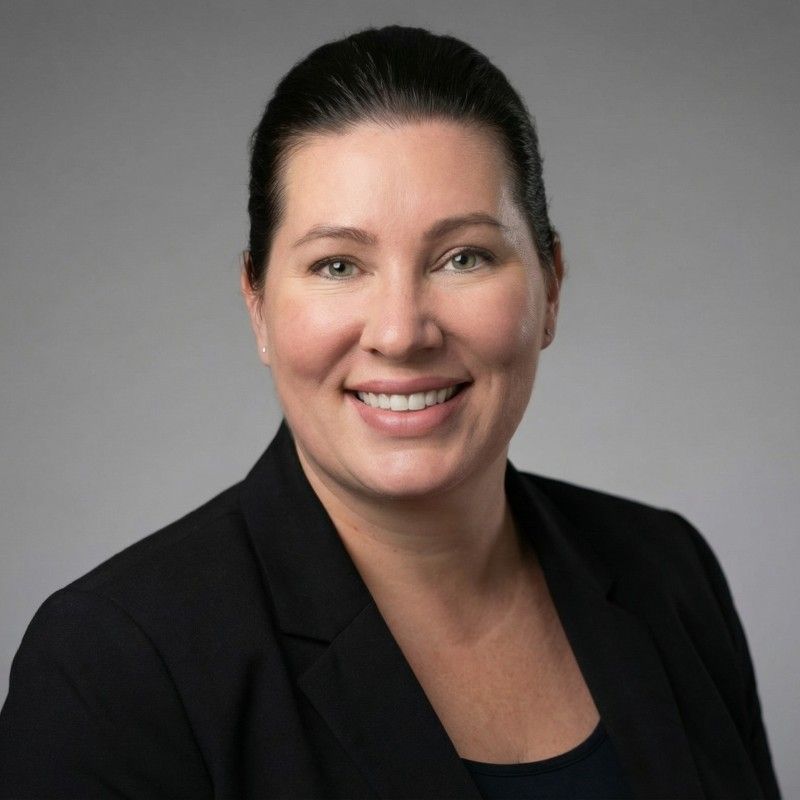
With a dual background in I/O Psychology (PhD Candidate) and Business Management (MBA), Marie bridges the gap between clinical rigor and operational strategy. She oversees B2B relations, compliance, and the 'business' of risk management.