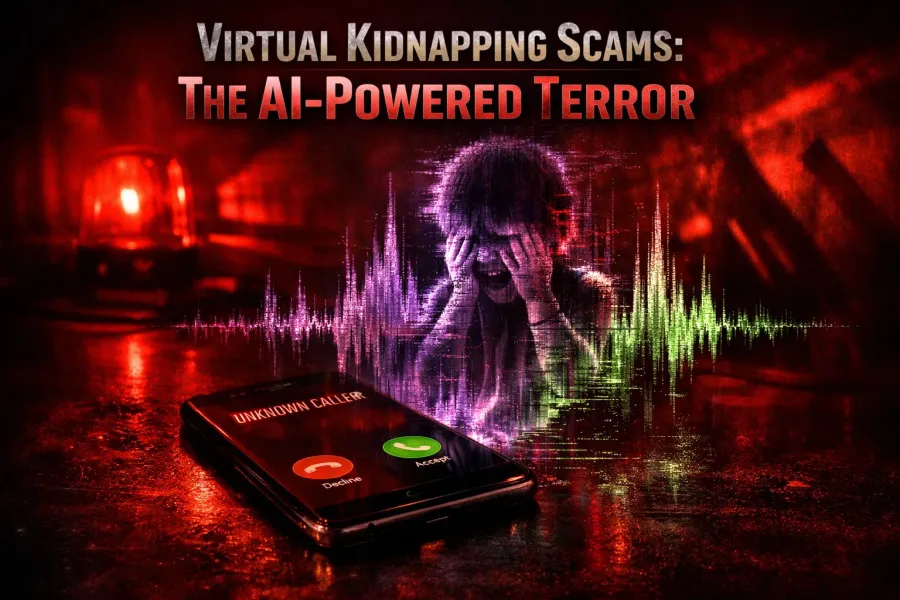
Your phone rings from an unknown number. You answer. On the other end involves the sound of your daughter screaming for help. A harsh voice cuts in and demands a ransom. Your heart stops. The terror is real but the abduction is not. This is the reality of virtual kidnapping scams in the age of artificial intelligence. It is a crime that hacks your biology rather than your physical security.
We see a massive shift in how predators operate. They no longer need to physically snatch a target to extract a ransom. They only need to convince you that they have. These criminals weaponize your love and fear against you. They use technology to blur the line between reality and deception. The FBI reports a significant surge in these crimes because they are low risk and high reward for the perpetrators. You must understand the mechanics of this fraud to defeat it.
How Scammers Clone Voices From Social Media
Many people wonder how a stranger gets a recording of their loved one’s voice. The answer lies in our digital footprints. We upload hours of high-quality audio to the internet every day without thinking twice. We post on TikTok, Instagram Stories, and Facebook reels.
Criminals harvest this public data. They feed these audio clips into sophisticated AI voice synthesis tools. The technology has advanced rapidly. It creates a terrifyingly accurate clone. Here is the reality of the threat: AI voice cloning technology can now replicate a person’s voice with 95% accuracy using just 3 seconds of audio. That is shorter than the time it takes to say hello and introduce yourself.
The scammer uses this clone to simulate distress. They might play a recording of your child crying or begging for help. The audio quality does not need to be perfect. The phone connection adds static and your panic fills in the gaps. You hear what you fear most.
The Psychology of Panic and Compliance
Virtual kidnapping scams are effective because they bypass your logic. They target the amygdala. This is the part of the brain responsible for the fight-or-flight response. When you believe your family is in danger: your body floods with adrenaline.
This physical reaction has a cognitive cost. Psychological studies show that high-stress fear states can reduce cognitive processing speed by up to 50%. You effectively lose half of your ability to think critically during the crisis. You become highly suggestible. You are less likely to question inconsistencies.
Scammers exploit this state by creating urgency. They keep you on the phone. They demand immediate payment. The ransom amounts are often specific. The FBI notes that average ransom demands range from $600 to $2,000. This is intentional. It is a sum that many people can access quickly via a wire transfer or cash app without triggering bank fraud alerts. They want a quick turnover before your rational brain kicks back in.
Implementing a Family Safe Word Protocol
Technology caused this problem but human connection solves it. You cannot rely on voice recognition anymore. Your ears will deceive you. You need a verification layer that AI cannot hack. This is known as a “safe word” or a family challenge-response protocol.
Every family needs a specific word or phrase that signifies a true emergency. Follow these rules to set one up:
- Keep It Offline: The word must never appear on social media. Do not use the name of a pet or a street you lived on.
- Make It Simple: It should be easy to remember under stress. A random object or a private joke works best.
- Drill It: Talk about it at dinner. Make sure the children and the grandparents know it.
If you receive a threatening call: ask for the safe word. A real kidnapper with your child will be able to get the answer. A scammer using an AI soundboard will fail immediately.
Immediate Steps During a Suspected Incident
Preparation is your best defense. You need to know exactly what to do if that terrifying call comes through. The goal is to break the psychological spell the scammer has cast.
1. Pause and Breathe Force yourself to take a breath. Remind yourself that virtual kidnapping scams are statistically more likely than physical abductions.
2. Verify Independently Attempt to contact the person supposedly taken. Use a different phone line if you can. Text them. Check their location on a family tracking app like Life360 or Find My iPhone. Even if the caller tells you not to: you must try to verify.
3. Ask Proof of Life Questions If you cannot reach your loved one: turn your attention to the caller. Do not give them information. Ask questions only your family member would know. Ask about the name of a stuffed animal or what they had for breakfast.
4. Do Not Pay Once you send money via wire or crypto: it is gone. Stalling buys you time to verify safety.
We live in an era where seeing and hearing is no longer believing. You must verify. Talk to your family today. Establish your protocols. It is better to have a plan you never use than to face a crisis without one.
Protect Your Family Now
Waiting until the phone rings is too late. You need a tangible plan in place before the crisis hits.

With a dual background in I/O Psychology (PhD Candidate) and Business Management (MBA), Marie bridges the gap between clinical rigor and operational strategy. She oversees B2B relations, compliance, and the 'business' of risk management.