You walk into a crowded transit station or a local coffee shop, and the hairs on the back of your neck suddenly stand up. You notice someone nearby who seems visibly upset. Are they just having a terrible day, or are they a legitimate physical threat? This is a critical question that business owners, employees, and everyday citizens face in unfamiliar crowds.
Anxiety about personal safety in urban environments is a valid concern. The world is unpredictable. However, fear often stems from a lack of actionable knowledge. When you do not know what specific physical cues precede a violent confrontation, everyone looks like a potential threat. You can change this dynamic. By learning how to identify aggressive body language, you transform anxiety into empowerment. You learn to trust your instincts and make smart decisions before a situation spirals out of control.
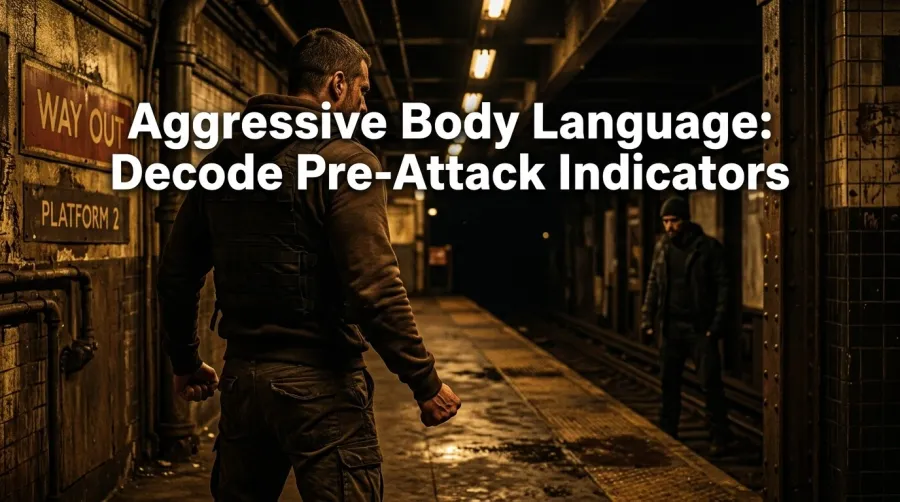
In the world of physical security, we rely on observable facts. Violence rarely happens in a vacuum. It follows a predictable escalation path. People broadcast their intentions through their movements, their posture, and their eyes. Today, we will explore how to decode aggressive body language and identify the pre-attack indicators that give you the critical seconds you need to react.
What Are the Most Common Signs of Aggressive Body Language?
To protect yourself, you first need a baseline understanding of how human beings act when they are relaxed. A relaxed person has loose shoulders, a comfortable stance, and a natural breathing pattern. When a person becomes agitated, their autonomic nervous system takes over. Their body prepares for a fight. This preparation creates visible changes that we call aggressive body language.
Here are the most common signs you need to watch for in public spaces:
Clenched Fists and Rigid Posture
When someone prepares to strike, their body naturally tightens. Watch their hands. A person who is simply frustrated might run their hands through their hair or talk with open palms. A person displaying aggressive body language will often clench their hands into fists repeatedly. You might also notice their shoulders hike up toward their ears while their chest puffs out. This rigid posture is a primal attempt to look larger and more intimidating to a target.
Pacing and Erratic Movement
Agitation generates a massive dump of adrenaline. The body needs to burn off this excess energy. You will often see an aggressor pacing back and forth in a confined area. This is not the slow, wandering pace of someone waiting for a bus. It is a tight, rapid, and aggressive march. They might shift their weight heavily from foot to foot. This bouncing motion is a strong behavioral indicator of severe agitation.
Personal Space Violations
Predators and aggressors use proximity to test boundaries. They will intentionally step into your personal space to see how you react. If you step back, they might step forward to close the gap again. This tactic is designed to intimidate you and cut off your escape routes. If a stranger ignores standard social boundaries and moves unusually close to you during a verbal exchange, you must treat this as a high-level threat indicator.
Target Glancing and Fixation
Look at their eyes. An aggressor will rarely maintain a soft gaze. They will either lock onto you with a hard, unblinking stare, or they will rapidly glance at the specific areas they intend to strike. This is known as target glancing. They might look at your chin, your waistline, or your hands to see if you are holding a weapon.
How Do Pre-Attack Indicators Manifest in Real-Time?
Aggressive body language is the foundation of threat detection. However, we must also look for specific pre-attack indicators. These are the immediate, involuntary actions that happen mere seconds before a physical assault. Understanding these cues is the core of situational awareness.
The Escalation of Agitation
Pre-attack cues often follow a predictable escalation. A conflict usually begins with verbal hostility. A person might shout, swear, or make unreasonable demands. As the situation degrades, the verbal hostility shifts into visible physical agitation. You will see rapid breathing. Their chest will heave as their body demands more oxygen for the impending physical exertion. You might also notice visible trembling in their hands or their voice. This trembling is not fear. It is the physical manifestation of an adrenaline overload.
Scanning for Witnesses and Exits
Before someone commits an act of violence, they naturally want to assess their risk of getting caught. This results in a behavior known as scanning. The aggressor will quickly look left and right. They are checking for police officers, security cameras, or bystanders who might intervene. They are also looking for their easiest escape route. If someone is arguing with you and suddenly breaks eye contact to quickly scan the room, a physical attack is highly imminent.
The Feeling of Sticking Out
Do not ignore your intuition. Victims of street crime often report a distinct feeling of sticking out or being watched just moments before an incident. Your brain is a supercomputer. It processes thousands of micro-expressions and environmental cues every second. When your subconscious picks up on someone staring at you or matching your walking pace, it sends a warning signal to your conscious mind. If you feel like you are being hunted, you probably are. Trust that feeling and alter your environment immediately.
Concealment and Shifting Weight
Watch how the person positions their body relative to yours. A major pre-attack indicator is blading. Blading occurs when a person turns their body sideways. They drop their dominant leg back and angle their non-dominant shoulder toward you. This accomplishes two things. First, it makes them a smaller target. Second, it hides their dominant hand from your view. They might be reaching for a weapon in their waistband or preparing to launch a strike. If a confrontational person suddenly blades their stance, you must assume they are armed or ready to attack.
What Immediate Steps Should You Take?
Identifying aggressive body language and pre-attack indicators is only half the battle. You must know how to respond effectively. When you spot these signs, your primary goal is to avoid the conflict entirely. You win 100 percent of the fights you are not in.
Here are the immediate steps you should take once hostile body language is identified:
Create Distance Immediately
Distance is your best friend in a physical confrontation. It gives you time to react. If you notice someone displaying signs of anger like clenched fists or pacing, step back. Do not worry about being polite. Your safety is more important than social etiquette. Put a physical barrier between you and the aggressor if possible. Move behind a table, a car, or a counter. A physical barrier forces the attacker to alter their path, buying you precious seconds to escape.
Break the Target Lock
If you realize someone is fixated on you, you must break their target lock. Change your pattern. If you are walking down the street and feel you are being followed, cross the street. Enter a populated store. Look the person briefly in the eyes to show them you are aware of their presence, and then confidently move away. Predators look for easy targets who are distracted by their phones or unaware of their surroundings. By demonstrating strong situational awareness, you make yourself a difficult target.
De-Escalate with Your Posture
If you cannot escape and are forced into a verbal confrontation, manage your own body language. Do not match their aggression. If you puff out your chest and raise your voice, you pour gasoline on the fire. Instead, adopt a non-threatening but prepared stance. Keep your hands open and visible above your waist. This is known as a tactical pacification stance. It looks like you are simply talking with your hands, but it positions your arms to defend your face if a strike occurs. Speak in a calm, firm, and authoritative voice.
Locate Your Exits and Report
Whenever you enter a new public space, you should casually note the locations of the exits. This simple habit takes two seconds but saves lives during an emergency. If a situation escalates and aggressive body language turns into physical violence, you already know your escape route. Once you are safe, report the incident to local security or law enforcement. Provide them with specific details about the behavioral indicators you witnessed.
Empowering Your Team and Yourself
Security is not just about installing cameras or hiring guards. True security starts with human intelligence. Small business owners and corporate leaders must recognize that their employees face these risks every day. Whether they are commuting on public transit, walking to their cars in a dark parking lot, or dealing with an irate customer in the lobby, they need the tools to stay safe.
Training your team to decode aggressive body language reduces workplace violence and liability. It builds confidence. When people know what to look for, they stop jumping at shadows and start making tactical, informed decisions. They recognize the difference between a frustrated client and a genuine threat. This knowledge creates a culture of safety and vigilance.
Mastering situational awareness requires practice. You must actively observe the world around you. Put your phone away when you are walking in transitional spaces like parking garages or alleyways. Watch how people interact. Notice the baseline behaviors of the environment. Over time, spotting the anomalies will become second nature to you.
Aggressive body language is a warning siren. It gives you the chance to act before the damage is done. Do not ignore the clenched fists, the target glancing, or the sudden blading of a stance. Trust your gut when you feel like you are sticking out in a crowd. By understanding these pre-attack indicators, you take control of your personal safety.

With a dual background in I/O Psychology (PhD Candidate) and Business Management (MBA), Marie bridges the gap between clinical rigor and operational strategy. She oversees B2B relations, compliance, and the 'business' of risk management.
View Author Page →