Clone News Scam Sites, Driver Privacy Claims & AI vs Copyright (07/12/2026)
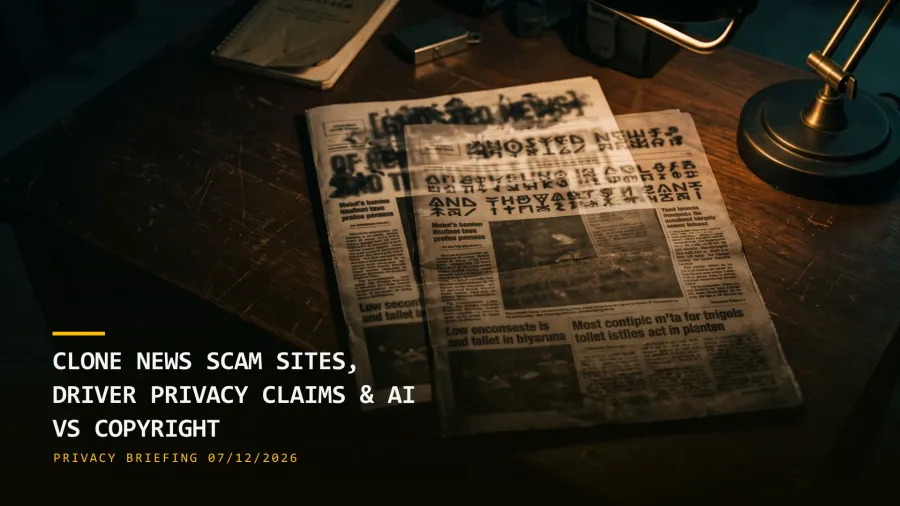
- › Fraudsters are cloning real news outlets, faking articles that look like they came from major publishers to lure victims into fake investment sites.
- › The plaintiffs' bar is ramping up Driver's Privacy Protection Act claims, targeting companies that match license plate data to drivers through ALPR systems.
- › AI companies are lobbying to water down Australia's copyright laws as the government weighs datacenter investment against creators' rights.
Trust is the target this weekend. Scammers are wearing the credibility of real news brands to move victims into fraud, a wave of lawsuits is testing who owns the trail your license plate leaves, and AI firms are asking a government to loosen the rules on whose work trains their models. Each one is a fight over a familiar thing: who gets to use your attention, your data, or your creative output, and whether you ever agreed to it.
Top Privacy Alerts
1. Fraudsters Clone Real News Sites to Lure Victims Into Investment Scams
Fraudsters are creating fake articles that look like they came from established publishers, including outlets like the Guardian, then sharing them on social media to funnel victims toward scam investment sites (The Guardian). The scam borrows a trusted brand’s credibility, because a fabricated story under a masthead you recognize slips past the skepticism a random link would trigger. The defense is the same as always: verify the source before you act on the urgency.
Operator Note: A recognized logo is not verification. Teach your people to reach the outlet directly rather than through a link in a social post, especially when the story pushes money toward a deadline.
2. Plaintiffs Push Driver’s Privacy Protection Act Claims Over License Plate Data
The plaintiffs’ bar is ramping up claims under the Driver’s Privacy Protection Act, testing whether companies that use automated license plate reader data to match plates back to driver records are exposing protected motor vehicle information (PogoWasRight). A license plate feels public because it hangs on the back of your car, but the moment a private company links it to who you are and where you have been, it becomes a dossier you never consented to.
3. AI Companies Lobby to Weaken Australia’s Copyright Laws
AI companies are pushing to water down Australia’s copyright protections as the government weighs the pull of datacenter investment against the rights of the artists whose work trains the models (The Guardian). I am pro-AI and pro-progress, and this is still the right fight to watch, because the question of whose data feeds a model without consent is the same question that runs under every privacy debate this year.
The Axe Report is a daily briefing from Grab The Axe. Need help assessing your organization’s security posture? Take our free Human Attack Surface Score assessment.

A PhD candidate in Health Psychology and former Corrections Officer, Jeff founded GTA to dismantle passive security models. He focuses on the 'Human Zero-Day', mitigating executive burnout and decision fatigue before they become security breaches.
View Profile →Media Inquiries
For expert commentary, interview requests, or high-res assets regarding this announcement, initialize the terminal.
)