Meta's AI Layoff Lawsuit, a Denied Mass Warrant & Texas Age Checks Stand (07/15/2026)
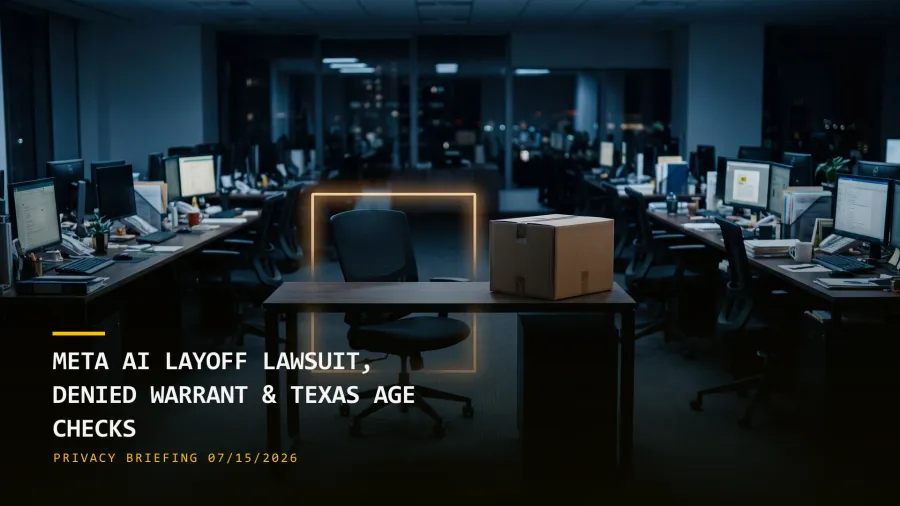
- › Dozens of Meta employees sued the company, alleging AI was used to tag workers who took maternity or disability leave for disproportionate selection in layoffs.
- › A US magistrate judge denied federal agents a month-long warrant to surveil the phones of thousands of uninvolved Ohio residents.
- › The Supreme Court declined to block Texas SB 2420, leaving the nation's first app store age-assurance law in full effect.
- › Major book publishers sued Google over Gemini AI training, calling it one of the most prolific copyright infringements in history.
- › The EFF found most smart watches, rings, and bands lack basic transparency reports and key privacy features.
An algorithm decided who lost their job, and the people it picked were the ones who had taken leave to have a baby or recover from illness. That lawsuit is the whole privacy fight in one story: a system reads a record about your life and makes a decision you never got to argue with. Elsewhere a judge told federal agents no when they asked to watch thousands of phones belonging to people suspected of nothing, and the Supreme Court let Texas start checking IDs at the app store. Someone is deciding what your data means about you today.
Top 5 Critical Privacy Alerts
1. Meta Sued Over AI-Tagged Layoffs of Workers Who Took Leave
Dozens of Meta employees filed a lawsuit alleging the company used AI to tag workers who had taken maternity or disability leave, and that those people were disproportionately selected for layoffs (The Guardian). This is the automated-decision problem with a face on it. The record of your leave was collected for one purpose, and a model turned it into a reason to end your job, with no one in the room to explain the call or hear an appeal.
Operator Note: Any data you hold about an employee’s life can become an input to a decision about them. If you cannot explain how a model reached a conclusion about a person, you should not be using it to decide their future.
2. Judge Denies Feds a Month-Long Warrant on Thousands of Ohio Phones
A US magistrate judge denied a search warrant that would have let federal agents surveil the phones of thousands of uninvolved, unsuspected Ohio residents for a month (PogoWasRight). Dragnet requests like this treat everyone in a geographic area as a suspect until filtered, and a judge saying no is the rare friction that keeps the general warrant from quietly becoming normal.
3. Supreme Court Lets Texas App Store Age Checks Stand
The Supreme Court declined to block Texas SB 2420, so the nation’s first app store age-assurance law remains in full effect (JD Supra). Age verification sounds narrow until you follow the mechanics: proving a child is a child requires checking everyone, so a law aimed at minors ends with every adult handing an ID to an app store.
4. Publishers Sue Google Over Gemini AI Training
A group of major book publishers sued Google for copyright infringement over Gemini’s training data, calling it one of the most prolific infringements of copyrighted material in history (The Guardian). I am pro-AI, and the consent question underneath this is the same one that runs through every story on this page: whose material fed the system, and did anyone ask.
5. Most Wearables Lack Basic Privacy Transparency
The EFF found that most smart watches, rings, and fitness bands lack basic transparency reports and key privacy features, despite collecting continuous health data (EFF). These devices read your body all day, which makes them the most intimate sensors most people own, and the companies behind them will not say who gets to ask for that record.
Additional Privacy Alerts
Privacy Laws & Regulations
- California Steps Back From an Age-Gating Expansion: The EFF reports California pulled back from a dangerous expansion of its age-gating law, a rare move against the spreading pressure to check IDs across the web. EFF
The Axe Report is a daily briefing from Grab The Axe. Need help assessing your organization’s security posture? Take our free Human Attack Surface Score assessment.

A PhD candidate in Health Psychology and former Corrections Officer, Jeff founded GTA to dismantle passive security models. He focuses on the 'Human Zero-Day', mitigating executive burnout and decision fatigue before they become security breaches.
View Profile →Media Inquiries
For expert commentary, interview requests, or high-res assets regarding this announcement, initialize the terminal.



)