NJ Data Broker Reversal, NY Smart Glasses Ban & Waymo Calls Police (07/11/2026)
- › New Jersey's new administration is moving to suspend enforcement of the state's own data broker law, which threatened political campaigns' access to voter-targeting data.
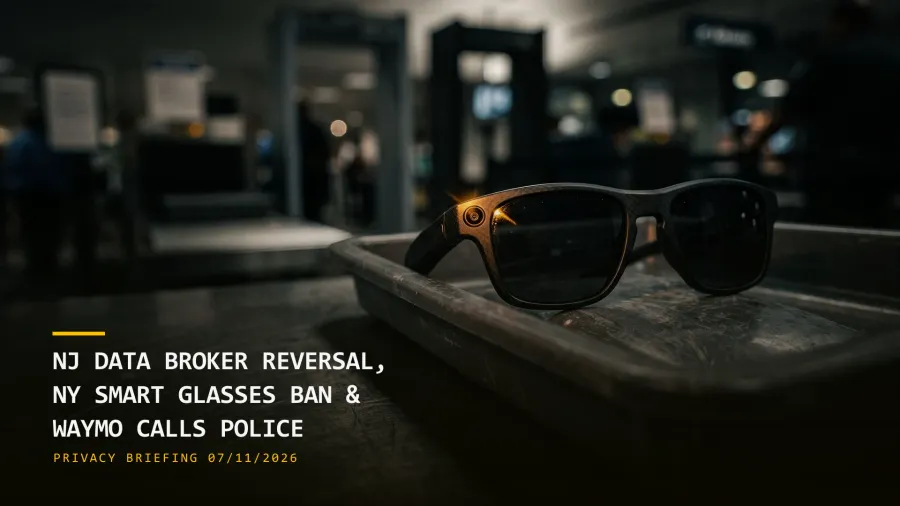
- › New York courts will require visitors to surrender smart glasses at the door starting July 20.
- › A Waymo robotaxi reported two teenage riders to police, turning a self-driving car into a witness against its own passengers.
- › Meta discontinued its Muse image feature after criticism that it generated images from public Instagram accounts.
- › The EFF argues automated content moderation is now permanent, and the accountability around it has not kept pace.
Two governments this week decided the surveillance question in opposite directions, and a robotaxi answered a third one nobody voted on. New Jersey is trying to unwind its own data broker law because the data flow it cut off was politically useful, New York is pulling recording devices out of its courthouses, and a Waymo turned its own passengers over to police. Each case is really the same question: who gets to decide when the record of your movements becomes evidence against you.
Top 5 Critical Privacy Alerts
1. New Jersey Moves to Suspend Its Own Data Broker Law
Governor Sherrill’s administration is working to suspend enforcement of New Jersey’s new data broker law after realizing it would cut off political campaigns’ access to key voter-targeting data (PogoWasRight). A privacy protection gets walked back the moment it inconveniences the people who wrote it, which tells you the data was never really meant to be off limits, only off limits to someone else.
Operator Note: When a data-minimization rule carves out the powerful, the exposure it was supposed to close stays open for everyone below them. Watch what the exemptions protect, not what the headline promises.
2. New York Bans Smart Glasses From Courthouses Statewide
Starting July 20, New York State courts will require anyone entering their facilities to surrender smart glasses and similar recording eyewear at the door (PogoWasRight). Courts understand that a device recording everyone in the room changes how people behave in it, which is the same reasoning that should apply well beyond the courthouse walls.
3. A Waymo Robotaxi Reports Teen Riders to Police
A self-driving Waymo reported two teenagers to San Mateo police after detecting them drinking alcohol during the ride (PogoWasRight). The car you hired to take you somewhere became a witness against you, and every robotaxi is a rolling sensor package whose logs can be pointed at the passenger as easily as at the road.
Operator Note: Every ride in an instrumented vehicle generates a record you do not control. Treat the cabin of a robotaxi as a monitored space, because it is one.
4. Meta Discontinues Its Muse Image Feature Over Privacy
Meta said it will discontinue Muse, an AI feature launched days earlier that automatically generated images using content from public Instagram accounts, after it “misses the mark” on user privacy (The Guardian). The feature shipped, the backlash landed, and it was gone in a week, which is what accountability looks like when it works, though the better outcome is catching this before launch rather than after.
5. The EFF Argues Automated Moderation Is Now Permanent
The EFF makes the case that automated content moderation is here to stay, and the accountability around these systems has not kept pace with how much they now decide (EFF). An algorithm that removes speech at scale makes decisions about real people with no one to appeal to, and the fix is transparency into how those calls get made, not a demand that the machines go away.
Additional Privacy Alerts
Privacy Laws & Regulations
- Irish NCSC Issues Board Cyber Governance Guidance Ahead of NIS2: The Irish National Cyber Security Centre published guidance for management boards and senior executives of organizations subject to the EU’s NIS2 directive, pushing cyber accountability up to the people who answer for the data. Inside Privacy
The Axe Report is a daily briefing from Grab The Axe. Need help assessing your organization’s security posture? Take our free Human Attack Surface Score assessment.

A PhD candidate in Health Psychology and former Corrections Officer, Jeff founded GTA to dismantle passive security models. He focuses on the 'Human Zero-Day', mitigating executive burnout and decision fatigue before they become security breaches.
View Profile →Media Inquiries
For expert commentary, interview requests, or high-res assets regarding this announcement, initialize the terminal.



)