Psychology Jul 9, 2026
Blameless Security: Why Punishment Kills Incident Reporting
A blameless security culture keeps incidents visible. Punish the person who clicked and you train the whole team to hide the next one. How to build the culture.
Declassified operational reports, psychological protocols, and technical breakdowns. These are field-tested mechanics for securing the perimeter and the mind.
A blameless security culture keeps incidents visible. Punish the person who clicked and you train the whole team to hide the next one. How to build the culture.
Ransomware prevention is not one control. It is a layered framework across attack surface, identity, backups, detection, and rehearsal. Here is how the pieces fit together.
Decision fatigue quietly erodes security judgment as the day wears on. The psychology of why tired teams approve, dismiss, and allow, and how to design around it.
Cognitive security defends the decision-maker's biology, the third leg of Grab The Axe's Trinity of Defense. Why human error is a physiology problem and how to patch the Human Zero-Day.
A complete cyber security guide and one leg of Grab The Axe's Trinity of Defense: how to assess, test, and harden your digital perimeter against the attacks that actually land.
Behavioral security treats human behavior as an attack surface you can measure and defend. What it is, why awareness training fails, and how to build the program.
What physical security is, how the four functions and five layers work, and where most facilities fail. A field guide from auditors who break in for a living.
Istio 1.29 supports both sidecar and ambient data planes. How each works, what you get for free, and the hardening steps every install needs.
A service mesh secures every internal call in your cluster with mTLS, identity-based access, and full telemetry. What it costs, and when to use one.
Your vulnerability scanner only audits the assets you know about. EASM tools audit what the internet sees. Learn how external attack surface management closes the gap between your asset inventory and your actual exposure.
Spot the signs of irritation in body language before a situation escalates to violence. Learn the pre-aggression cues protective agents use to buy critical seconds.
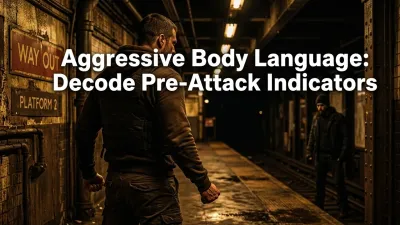
Learn how to spot aggressive body language and decode pre-attack indicators. Improve your situational awareness and personal safety in public spaces today.
Whether you need a full adversarial facility audit or an executive resilience protocol for your leadership team.