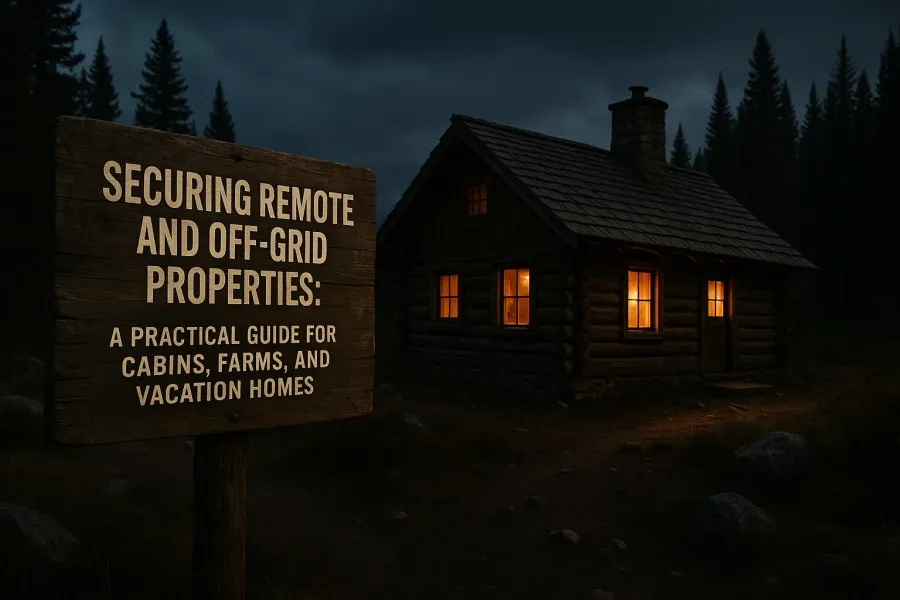
Is your slice of paradise truly secure when you’re not there? For owners of cabins, farms, and vacation homes, the isolation you value is also your biggest vulnerability. You’re not wrong to be concerned. Rural and remote properties are often targeted for theft of equipment, fuel, and materials precisely because of that isolation. The good news is that securing remote properties is not impossible. It just requires a different mindset: one that blends old-school hardening with smart, modern technology.
This isn’t about building a fortress. It’s about creating layers of defense that make your property a harder, less appealing target than the next one down the road. It’s about practical, no-nonsense steps you can take today to protect your investment and your peace of mind.
Low-Tech Deterrents: Your First Line of Defense
Before you spend a dime on technology, you need to master the art of physical deterrence. These are the commonsense, low-tech measures that make a potential intruder’s job more difficult and riskier: Think of it as hardening the perimeter. The goal is to create friction and make your property look occupied and well-maintained, even when it’s not.
First, focus on landscaping. Overgrown bushes and trees near your home are a thief’s best friend. They provide excellent cover. Keep shrubbery trimmed below window level and prune lower branches on large trees to eliminate hiding spots. Consider planting thorny or dense bushes like hawthorn or barberry beneath windows. It’s a natural, intimidating barrier. A well-maintained property signals that someone is present and paying attention.
Next, control access. A sturdy gate at the entrance to your property is more than a physical barrier; it’s a powerful psychological one: It communicates that this is private, protected land. Ensure the gate is made of solid material like steel and has a high-quality, weather-resistant lock. Supplement this with clear ‘No Trespassing’ or ‘Private Property’ signs. They may seem simple, but they are a legal and visual first warning.
Finally, use lighting strategically. An unlit, dark property is an open invitation. You don’t need to flood the area with light, which can be costly and annoying to neighbors. Instead, use motion-activated floodlights on key access points like doors, windows, and outbuildings. The sudden burst of light is startling and immediately draws attention, robbing an intruder of the cover of darkness. Solar-powered options are excellent for off-grid locations, providing reliable security without needing a connection to the grid.
Security Technology for Low-Connectivity Environments
Modern security tech isn’t just for city dwellers with high-speed internet. The rise of cellular-based security cameras and solar power technology has made remote monitoring more accessible and affordable than ever before. Securing remote properties with technology is about choosing the right tools for a challenging environment.
When you lack a reliable internet connection, cellular security cameras are your best option. These cameras operate on 4G or 5G networks, just like your smartphone; They can send you motion-activated alerts, images, and even live video feeds directly to your phone, wherever you are. Look for models with long-lasting rechargeable batteries that can be paired with a small solar panel. This creates a self-sustaining surveillance system that works completely off-grid. Place them to cover driveways, entry points, and valuable outbuildings.
For situations with zero cell service, consider satellite messengers or GPS trackers. A satellite messenger can be configured with sensors on doors or windows. If a sensor is tripped, the device sends a pre-programmed text or email alert via a satellite network. It’s not video, but it’s a reliable notification that something is wrong. You can also place small, battery-powered GPS trackers on high-value equipment like tractors, ATVs, or generators. If an item is moved, it will report its location, which is critical information for law enforcement.
Don’t underestimate the power of a loud, local alarm. A siren that can be heard from a great distance is a powerful deterrent in a quiet, rural area. A screaming alarm shatters the peace and tells an intruder they’ve been detected. It draws unwanted attention and significantly increases their risk of being caught, often causing them to flee immediately, even if no one responds right away.
The Human Layer: Building a Community Watch
Technology and physical barriers are only part of the solution. In remote areas where law enforcement response times are longer, your most valuable asset is a good relationship with your neighbors and local authorities: This human network provides the kind of on-the-ground intelligence that no camera can replace.
Start by introducing yourself to your nearest neighbors. A five-minute conversation can go a long way. Exchange phone numbers. Let them know when you plan to be away and ask them to keep an eye out for any unusual activity. Offer to do the same for them. This creates a simple, informal neighborhood watch: A friendly neighbor who knows your truck is a Ford is more likely to notice and report a strange Chevy parked in your driveway.
Make a point to connect with local law enforcement. When you’re in the area, stop by the local sheriff’s office or police department. Introduce yourself, explain that you have a remote property in their jurisdiction, and ask for their advice. Provide them with your contact information and a description of your property. This proactive engagement makes you more than just an address on a map: When a call does come in about your property, they have a name and a face to connect it with, which can add a sense of priority.
This community approach to securing remote properties builds a web of security. When neighbors look out for one another and authorities are familiar with the properties on their beat, it creates an environment where criminals feel more exposed and less comfortable operating.
Ultimately, protecting your remote property relies on a layered strategy: It starts with making the property physically difficult and unappealing to target; It’s reinforced by smart, off-grid technology that alerts you to threats in real-time; And it’s all held together by the strength of your community relationships. The threats to rural properties are real, but with this practical approach, you can ensure your quiet getaway remains a source of peace, not anxiety.
Peace of mind for your getaway property is possible: Read our practical, no-nonsense guide to securing your remote cabin, farm, or vacation home against modern threats.

A leader defined by a 'bias for action,' Dusten specializes in physical security assessments that impact profitability. He leverages high-logic strategies to pinpoint high-ROI vulnerabilities, ensuring defense measures actually scale with the business.